
SCHOOL
GARDENS
Program Overview
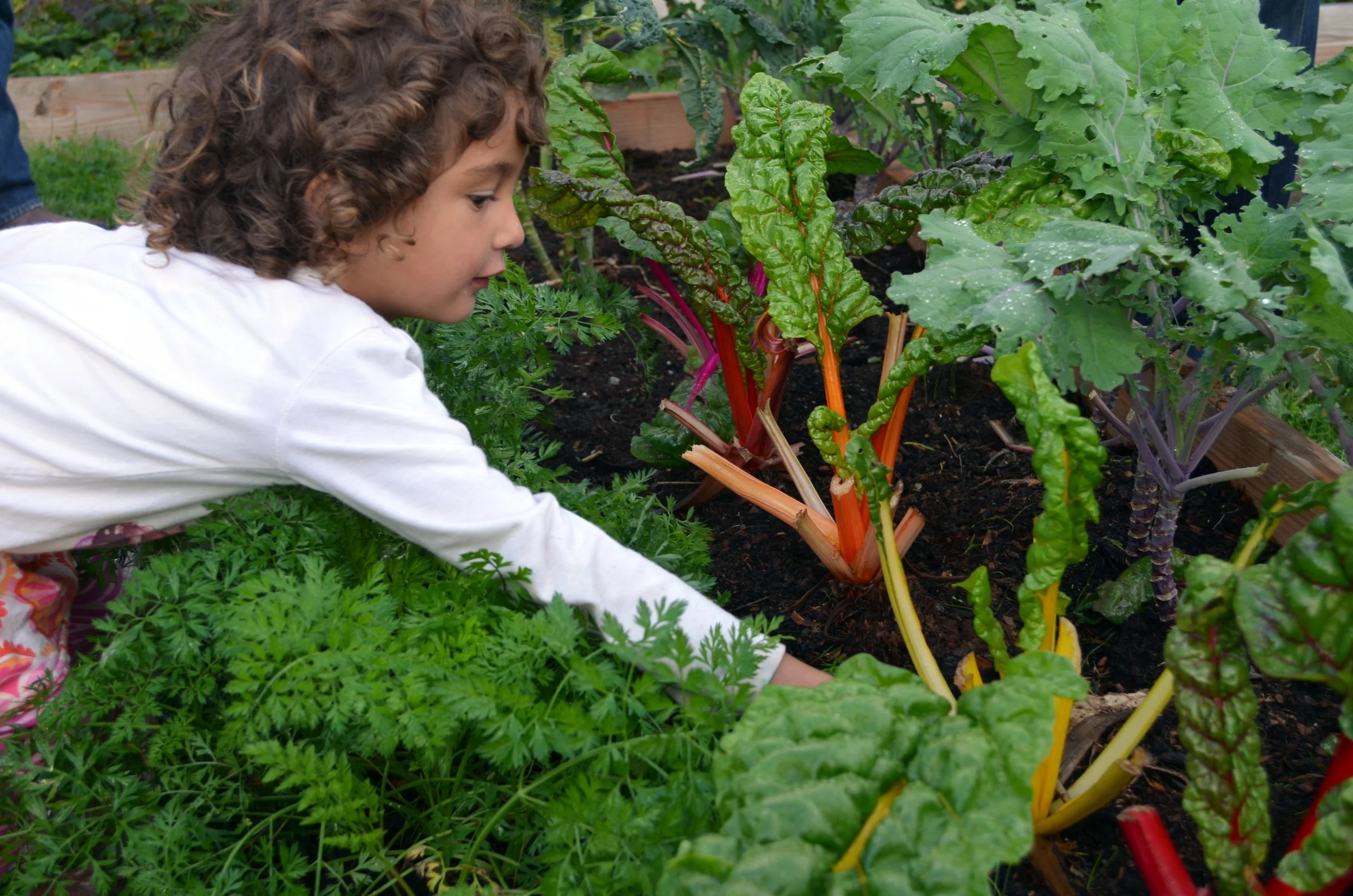
For over ten years, Slow Food East End has supported one of the most successful Slow Food school garden programs in the U. S. with a mission to reconnect children and their families with real food, and empower and inspire their local communities to eat well. Our efforts have benefitted over thirty East End schools so far.
These gardens have brought joy and learning opportunities to thousands of children across the East End. School gardens don’t just grow vegetables – school gardens grow healthy kids, one garden at a time.
Slow Food was inspired by chef and founder of the Edible Schoolyard Project, Alice Waters and her book, Edible Schoolyard: A Universal Idea, published in 2008, her book details the program's origins at a Berkeley middle school, integrating organic gardening and cooking into the curriculum to teach students about food, ecology, and nutrition.
Engaging school administrations to invest in garden based knowledge is challenging for schools which are usually not in session during prime growing season. We realized it is beneficial to support organizations like Amber Waves Farm, a Slow Food East End Snail of Approval winner, who offer exceptional summer educational programming at their farm.
Schools that have developed garden-based education programs report a wide range of beneficial results. On the East End we live surrounded by agricultural growers but many children do not have access to farms or the wonder of growing. When wellness and the importance of healthy eating are being taught in our schools, when chefs visit classrooms to teach cooking, when children have a chance to dig soil, plant seeds, watch them grow and be awed by the harvests, the results are life changing. We need future growers, we need informed future consumers who appreciate the importance of sustainable farms in our ecosystem.
We are proud for the work we’ve done and the support of our community. We’d love to hear from you if you’d like to help us grow the program. Our email is slowfoodeastend@gmail.com
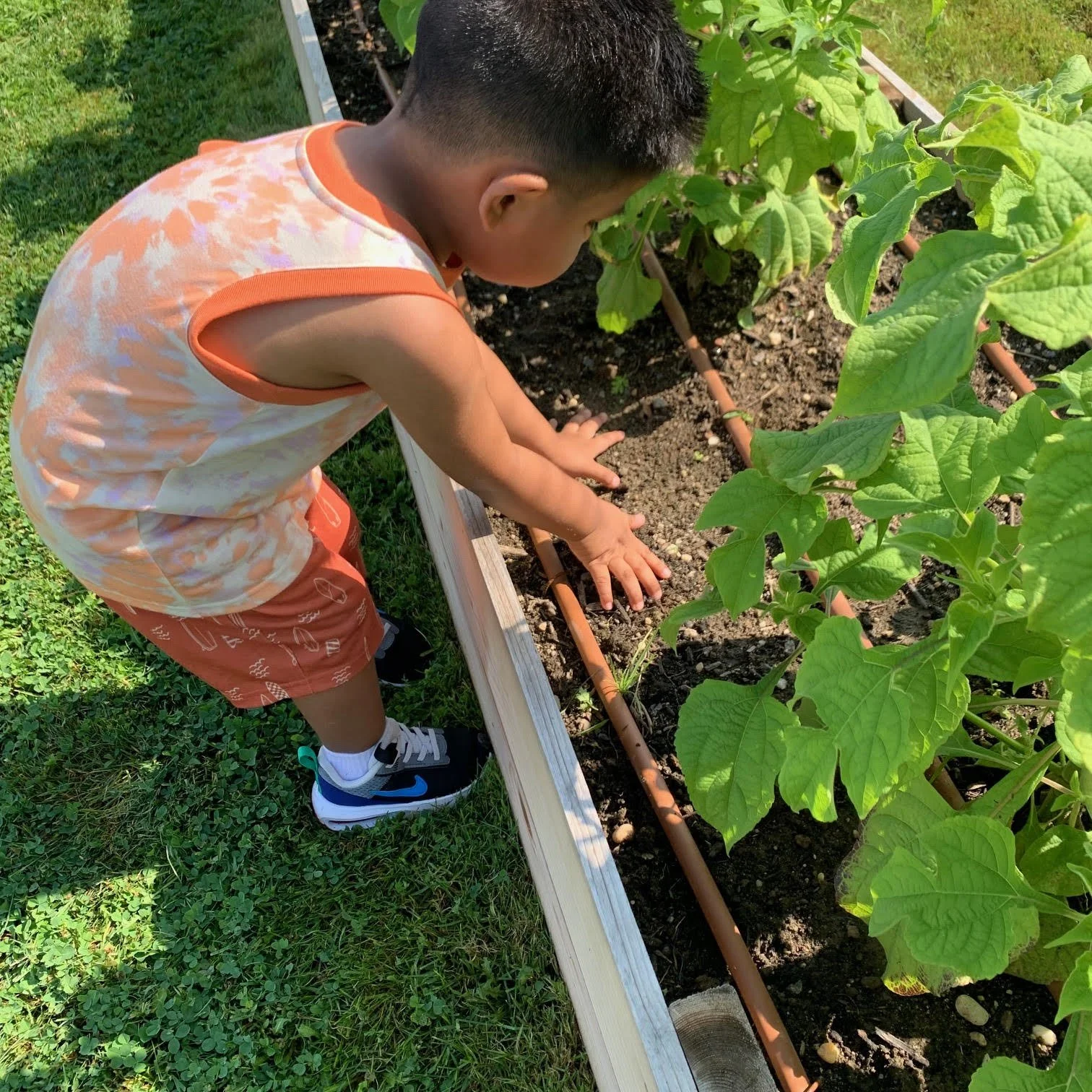
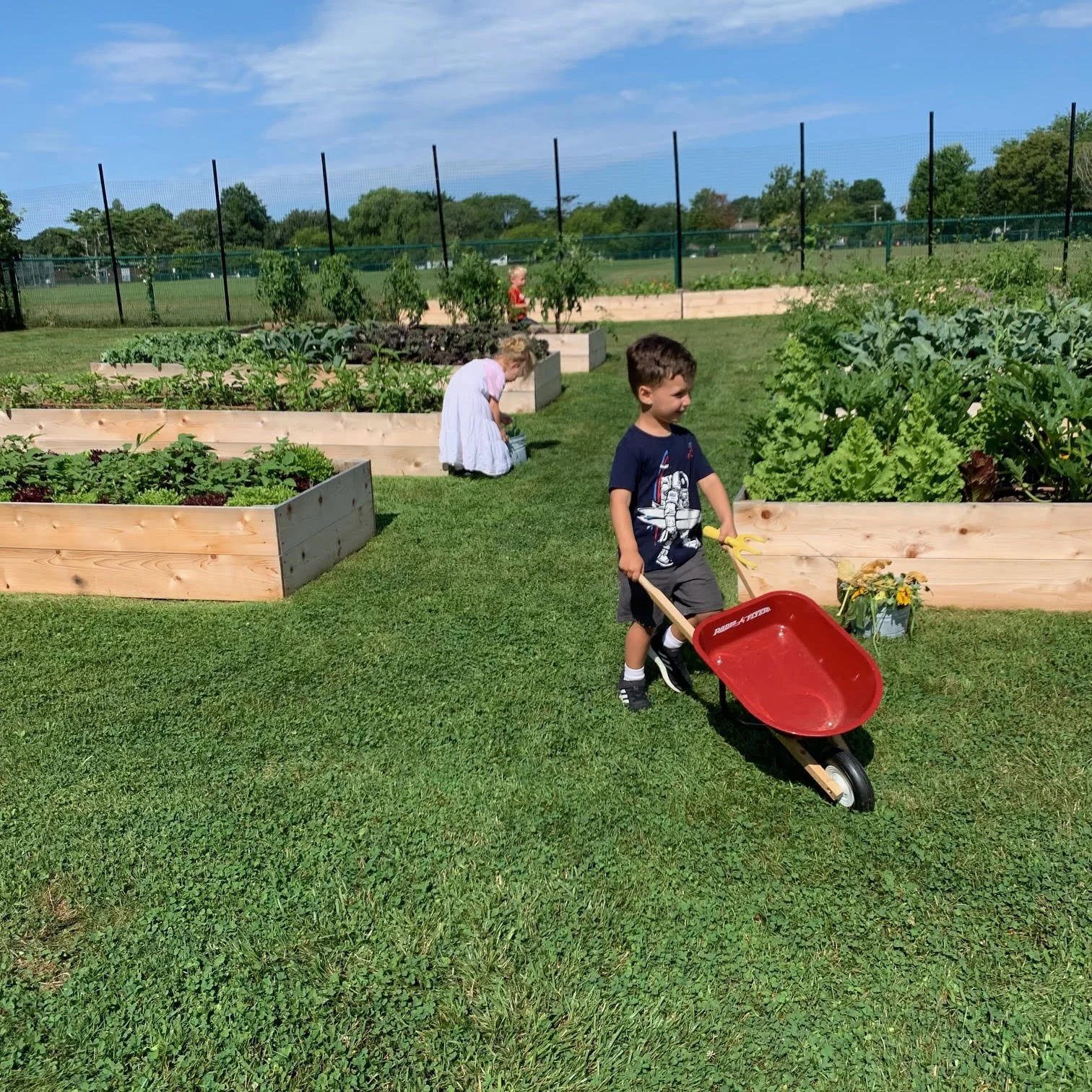
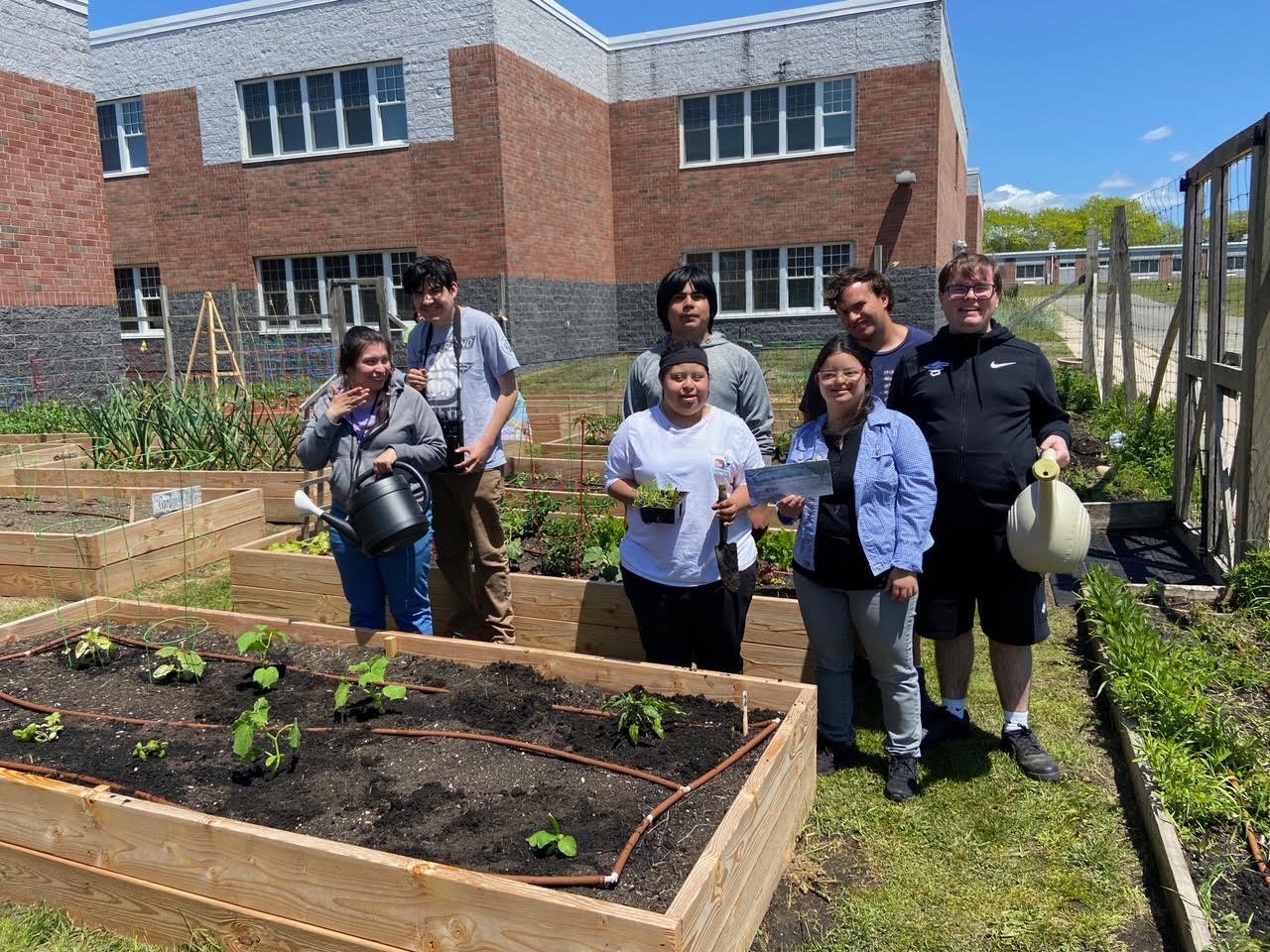
Highlights from our Many Years of Supporting Garden Programs
Master Farmers: We recruit trained experts who assist schools in the planning, creation, maintenance, and/or sustainable continuation of 30 school gardens on the north and south forks of long island in Suffolk county, that bring real food and environmental awareness to students in grades K-12.
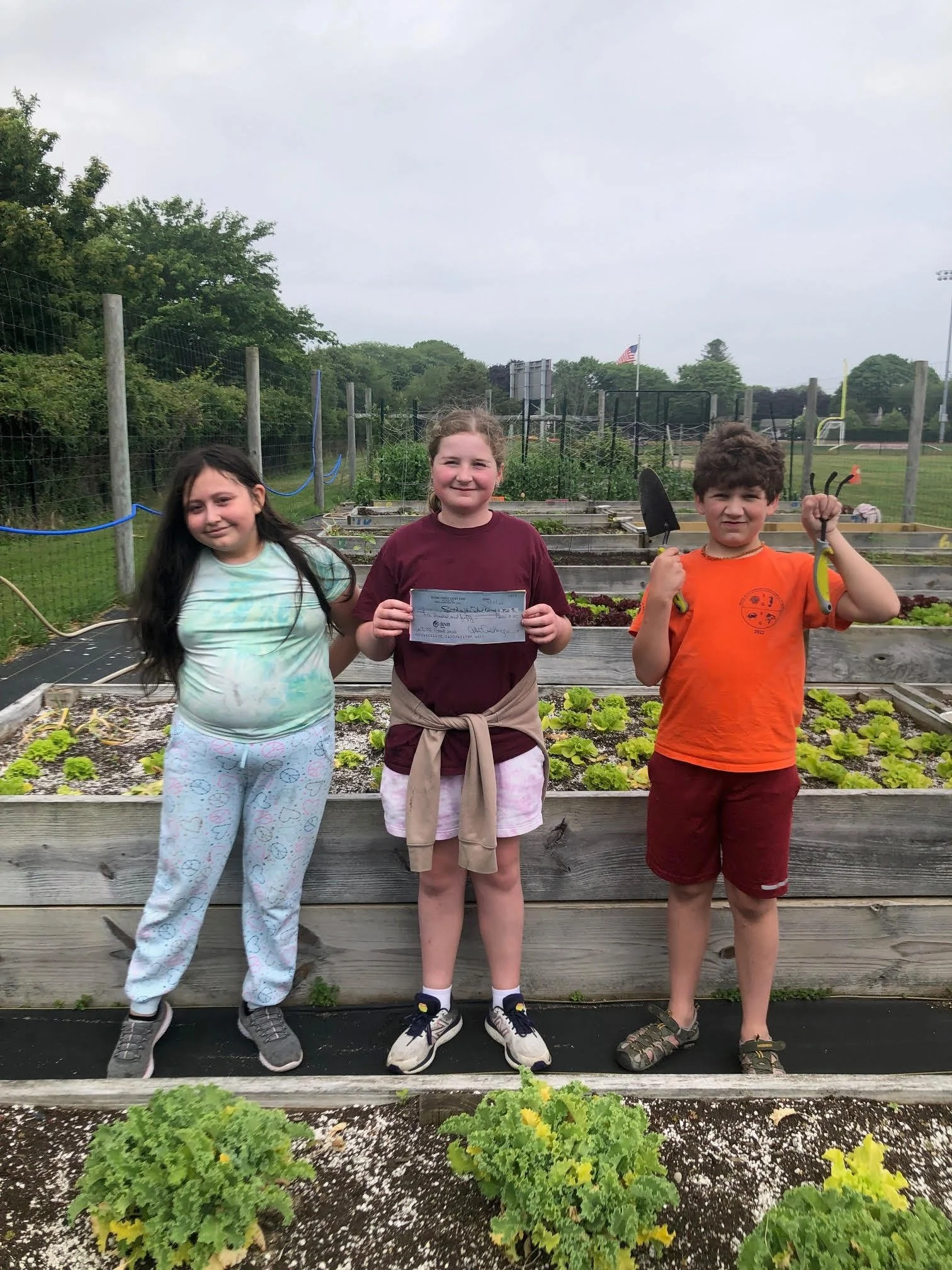
Mini Grants: Depending on our annual resources and fundraising efforts we aim to support schools and educational organizations with money for garden tools, supplies, and materials. Applications for grants up to $1,000 each are accepted on a rolling basis. We accept grant applications all year round, but we encourage early applications.
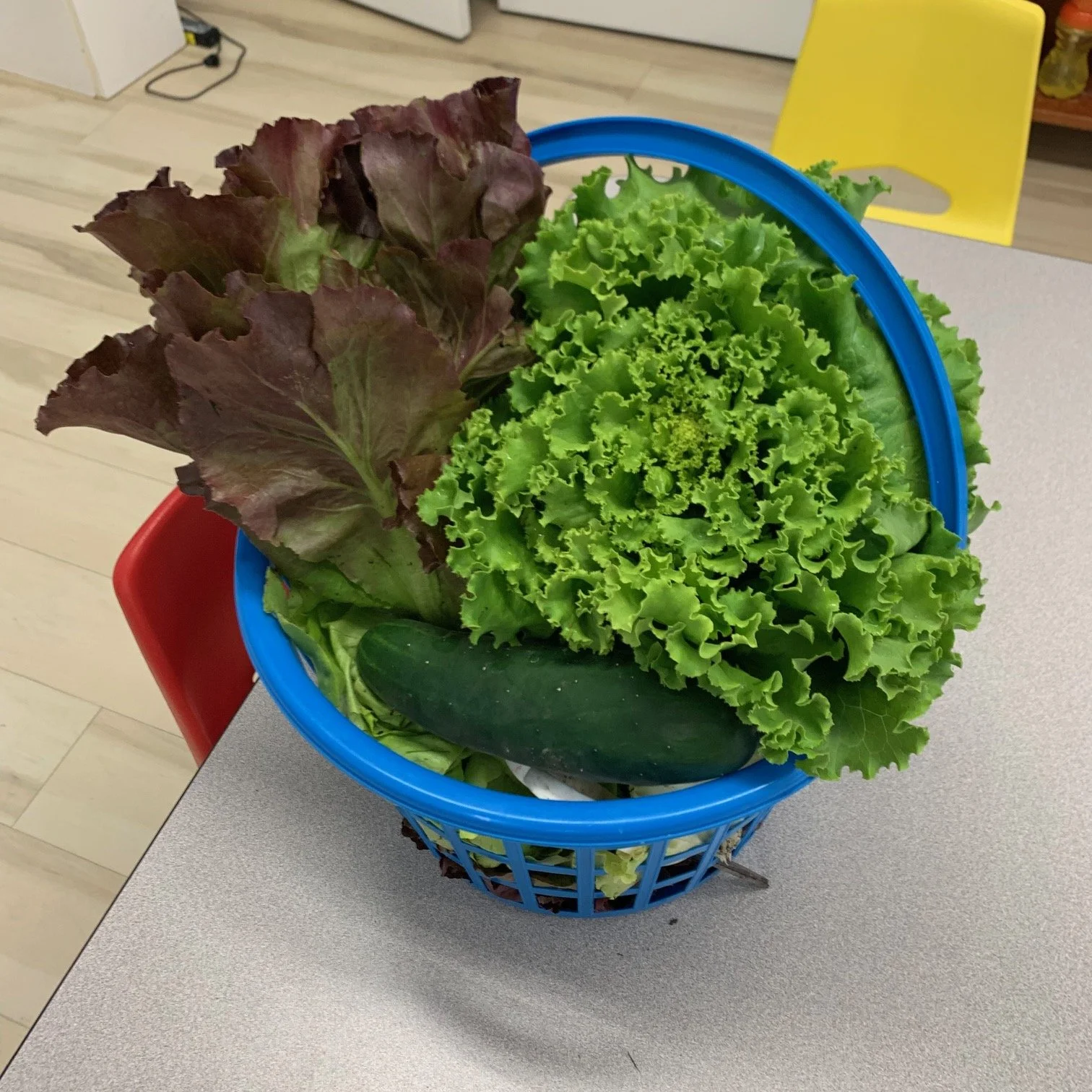
Garden-to-Cafeteria Sourcing: School garden-grown vegetables, many from the Slow Food Ark of Taste, have been used in the schools’ cafeterias. Heritage seeds sourced by Slow Food USA are one of the benefits we have shared with schools and libraries.
School Garden Curriculum Access: Lessons include plant botany, seed starting and saving, transplanting, as well as gardening, and composting. Curriculum includes cultural significance and history of food. Learn more about the Slow Food USA School Garden Network and download curriculum guides HERE.
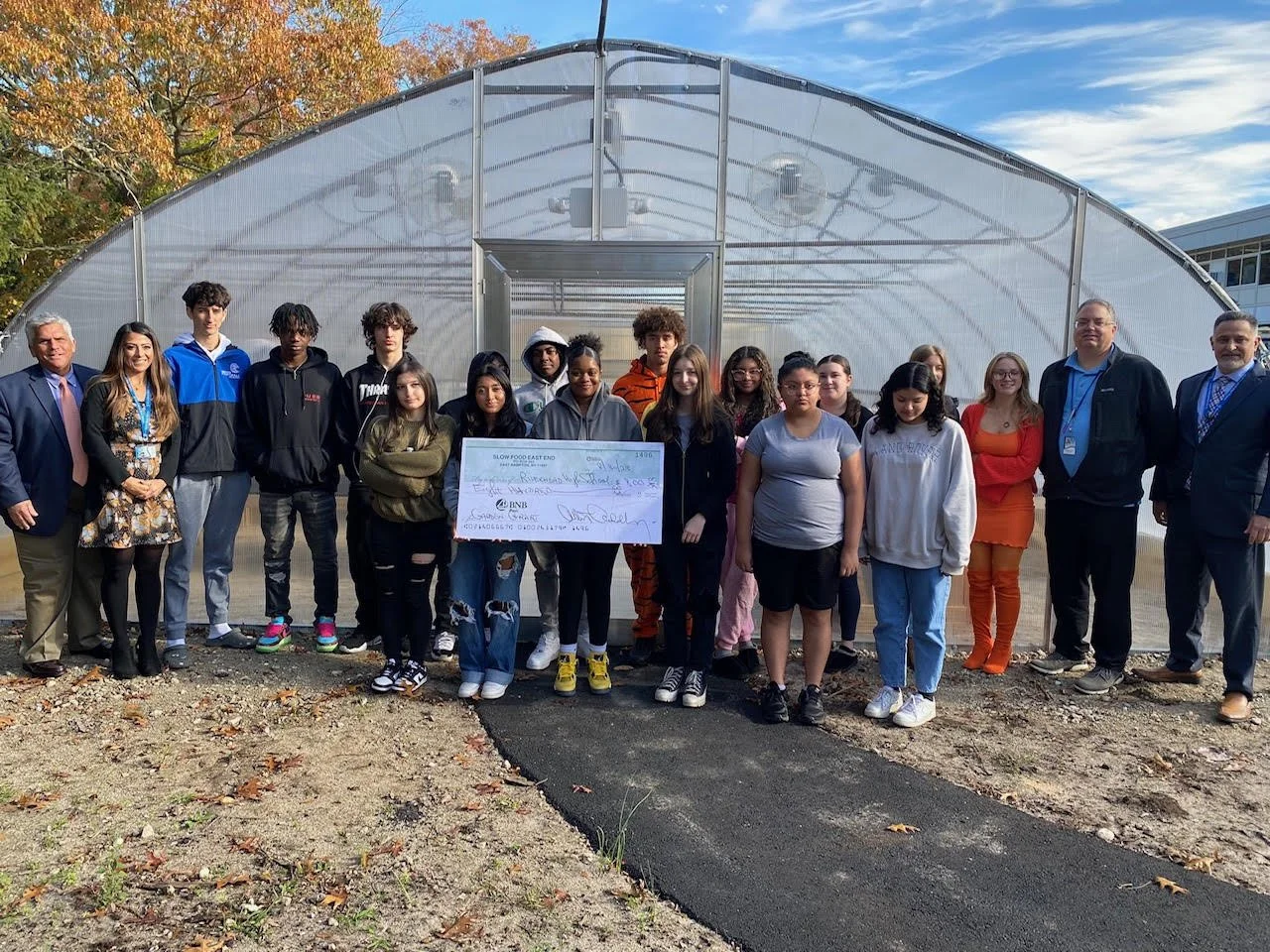
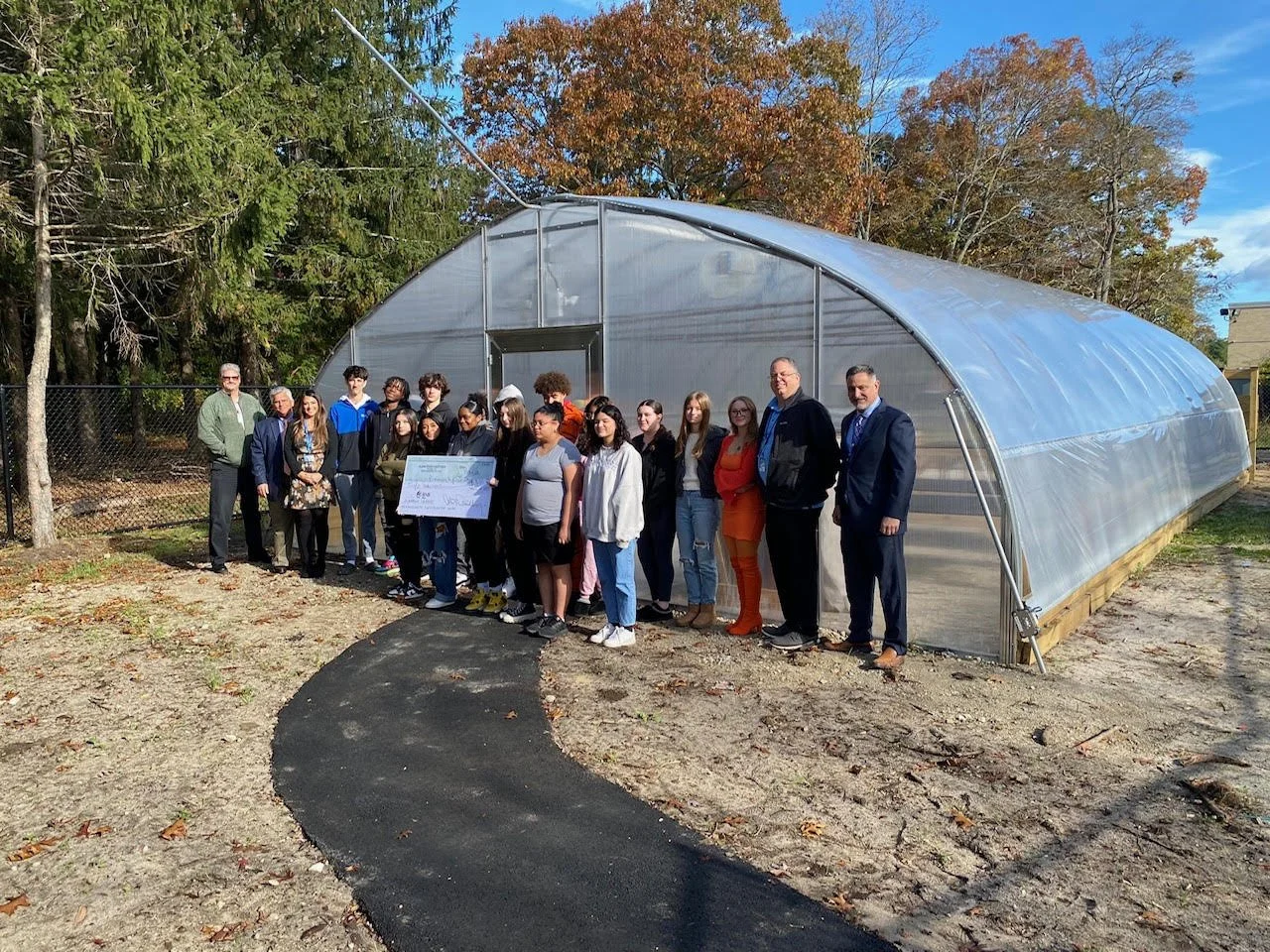
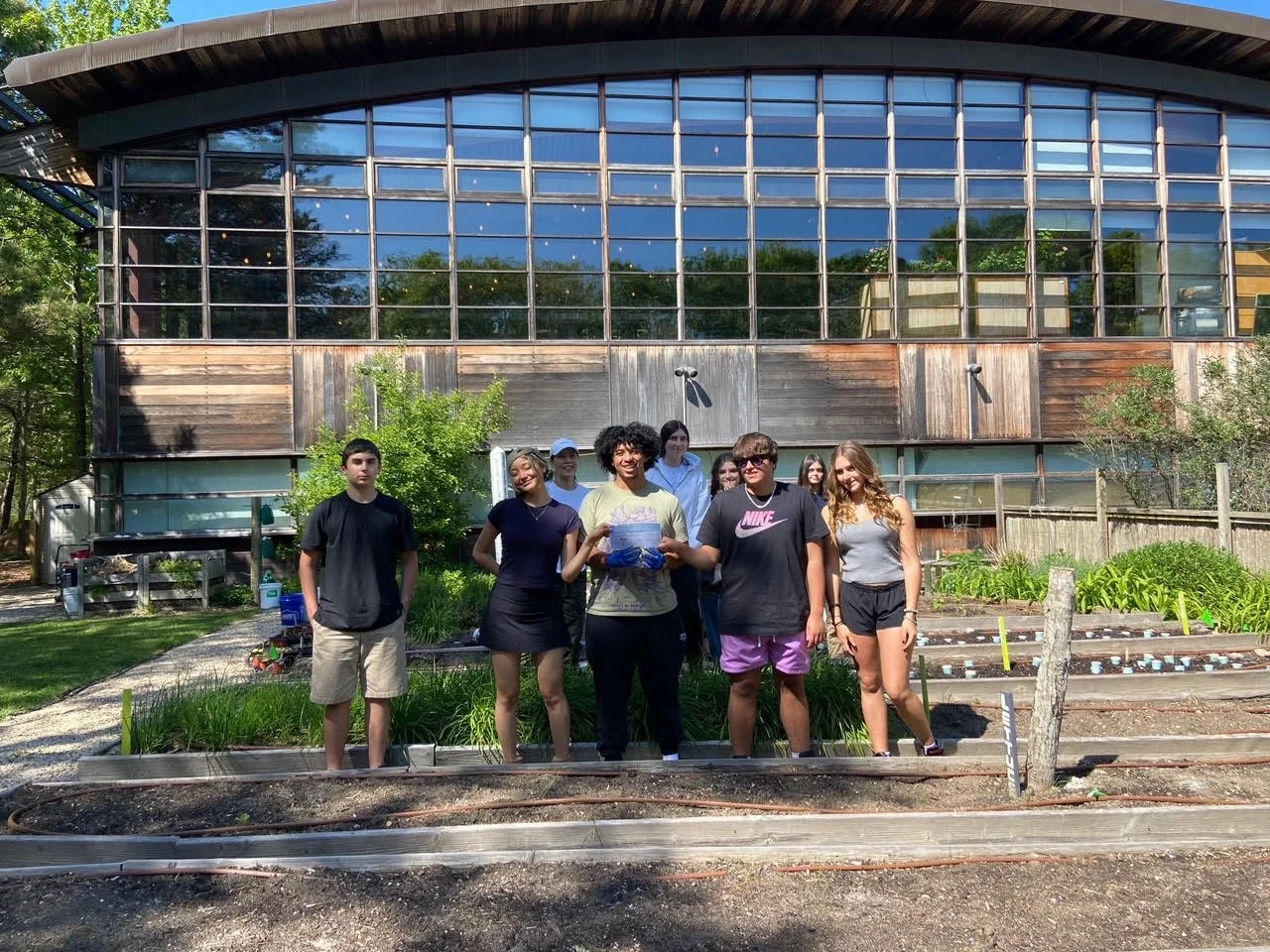
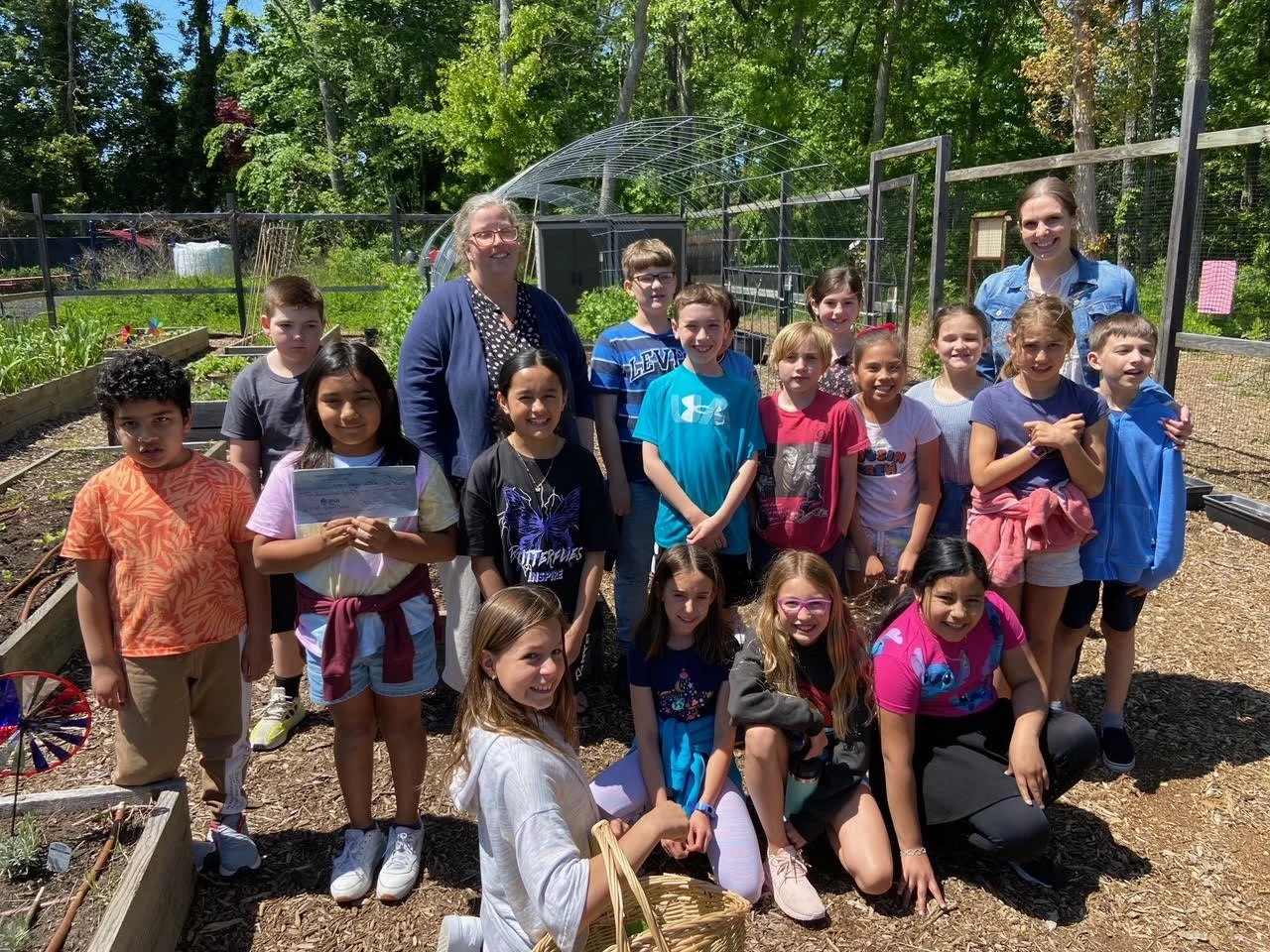
Some of our Accomplishments
EAST QUOGUE SCHOOL
Starting as a grassroots effort between staff and parents in 2016, the East Quogue School Garden Program is growing every year. Currently, it consists of a 13-raised-bed garden, a pollinator garden, native plantings, and a greenhouse for winter growing. All students attend weekly classes where they learn about age-appropriate gardening and sustainability practices, including seeds, soil, and biodiversity. Earth Rangers, a popular after-school club, is also available to all grades at different points of the school year for even more in-depth garden activities. Recently the school had its inaugural Harvest Moon Festival in September to celebrate all things garden and reset for the start of the school year. This was a great success and is sure to be a tradition for many years to come.
QUOGUE SCHOOL
The Quogue School Garden is to provide the school, students, and community with an outdoor learning resource to support curriculum areas and promote gardening, creativity, and environmental awareness as an extracurricular activity. Our garden will connect students to the world of plants, nurturing delight and curiosity while inspiring an appreciation and sense of stewardship of the environment. Students will take part in “hands-on learning” about sustainable food, organic gardening techniques, healthy lifestyles, and nutrition. The Quogue School Garden will be a creative space that beautifies the school grounds. It will provide a gathering space and landscape so the students may come together and respectfully connect to each other in a safe, natural, and inspiring environment for the purpose of sharing, learning, and building a sense of community gardening.
HAMPTON BAYS SCHOOL
The Good Ground School-Community is located at the Hampton Bays Middle School on Ponquogue Ave in Hampton Bays, NY. It was established in partnership with Cornell Cooperative Extension and NYS Healthy Places Grant in 2011. The garden is home to over 20 community members and school classes. Members grow a variety of produce in their 4′ X10′ beds for their families, friends, and local food pantry and use in school classroom lessons. In addition, students and staff enjoy growing organic tomatoes, cucumbers, carrots, lettuce, arugula, peppers, and much more. The teachers integrate both the garden and the greenhouse into the curriculum. The Hampton Bays School District offers a garden program to students attending the summer school program. Our students love to learn about the growth of flowers, and organic produce, and watch their own plats grow from seed. The Good Ground School-Community Garden is unique because it allows students and community members to share the joys of gardening through direct experiences and experimentation.
ROSS SCHOOL
Ross School’s Spiral Garden was designed by a local Ross student in 2010. The mission of this project is to instill a greater sense of awareness of the environment and to build on sustainability practices each year. The garden design employs the harmony and proportion of the Golden Ratio as an homage to the conceptual shape of Ross’ Spiral Curriculum. A growing space of 50-by-50 feet includes harvests of herbs, flowers, vegetables, and fruit, all incorporated in culinary classes and Ross Cafe menus. Both summer camps and Ross students use the garden as a learning space, integrating cultural history, art, science, and wellness lessons.
SOUTHOLD SCHOOL
Established in 2012, the Garden at Southold Schools instantly became a gathering place for the art and science of learning opportunities for young and old alike. Children and adults of all ages tend to the garden, and grow and harvest fresh produce and flowers. Salad greens, herbs, and other freshly picked vegetables are made available in the school cafeteria. The 4,200 square foot garden provides our teachers and students numerous ways to teach and learn about eating healthy and how things grow. The addition of our greenhouse has allowed us to extend the growing season and provide high school courses in agricultural education.
TUCKAHOE SCHOOL
At the Tuckahoe Common School, the Stony Brook Community Roots program was started with a grant from Stony Brook University. Matt Doris (head of the school’s food services department) has maintained and worked on the garden since it was planted in the spring of 2010. The food produced is incorporated into the school lunches provided in the cafeteria. Raspberries, kale, chard, cilantro and green beans are a partial list of what is grown. Maximizing the yield of the available space is a major intent here; one example of this idea in action is the beans growing up bamboo poles along the perimeter of the garden. Approximately 20 percent of the produce goes toward the lunch program with the remaining 80 percent donated to local families who meet certain economic criteria. One of the goals of this school garden is to teach sustainable practices and connect the students (ages 5 to 13 years old) to the land where their food is grown.
-
Amagansett School
Bridgehampton School
Butterfly Effect Project
Child Development Center of the Hamptons
Cutchogue East Elementary School
East Hampton School District
East Quogue
Eastport South Manor School District
Eleanor Whitmore Early Childhood Center
Greenport School
Hampton Bays School
Hayground School
Head Start Programs: Riverhead, Southampton and Southold Pre-K
John M Marshall Elementary School
LI Head Start and Recreational Center Bridgehampton
Mattituck-Cutchogue School District
Montauk School
Moriches Elementary School
Oysterponds School
Peconic Community School
Pierson Middle/High School
Remsenburg-Speonk School
Sag Harbor Elementary School
Shelter Island School
Southampton Union Free School District
Springs School
Master Farmer
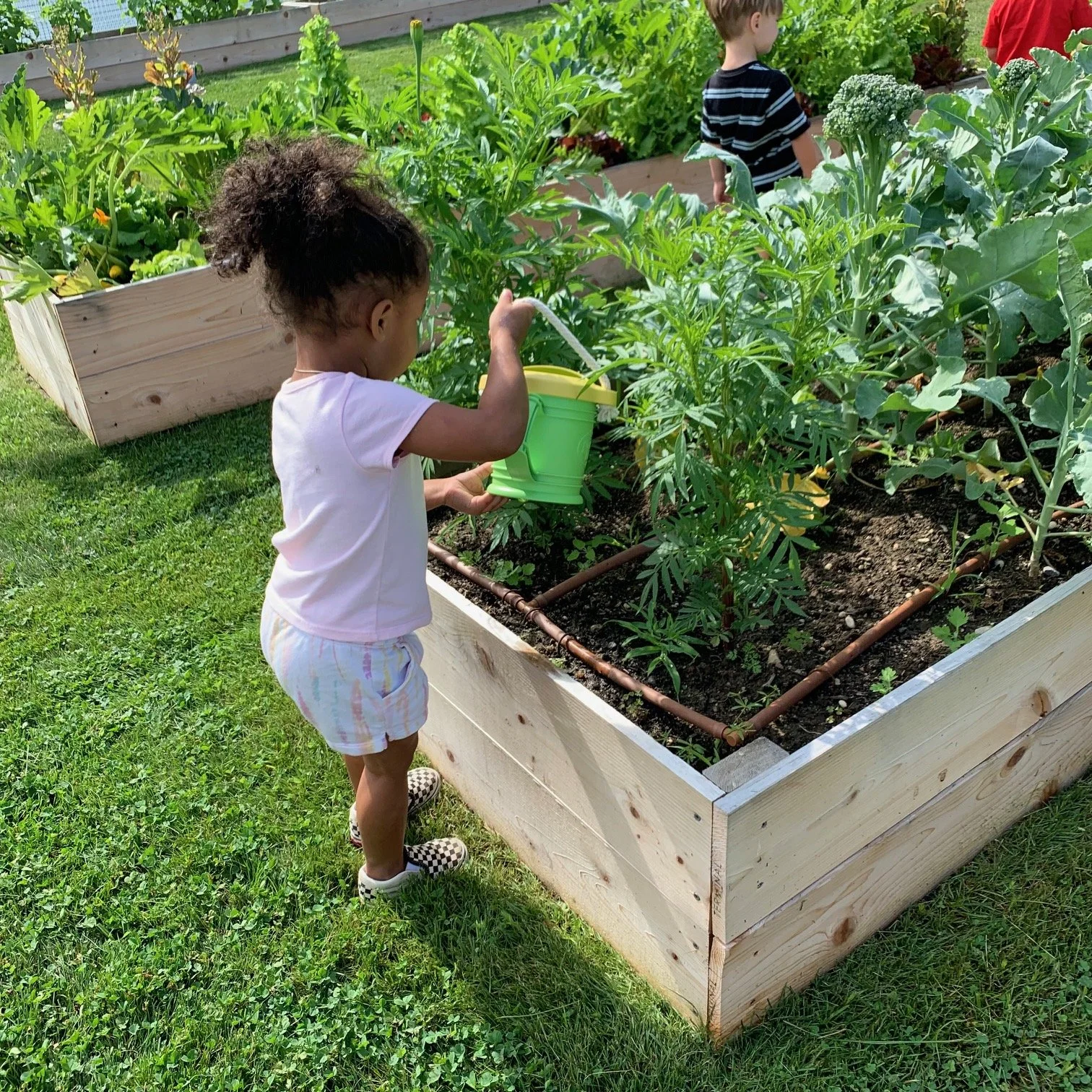
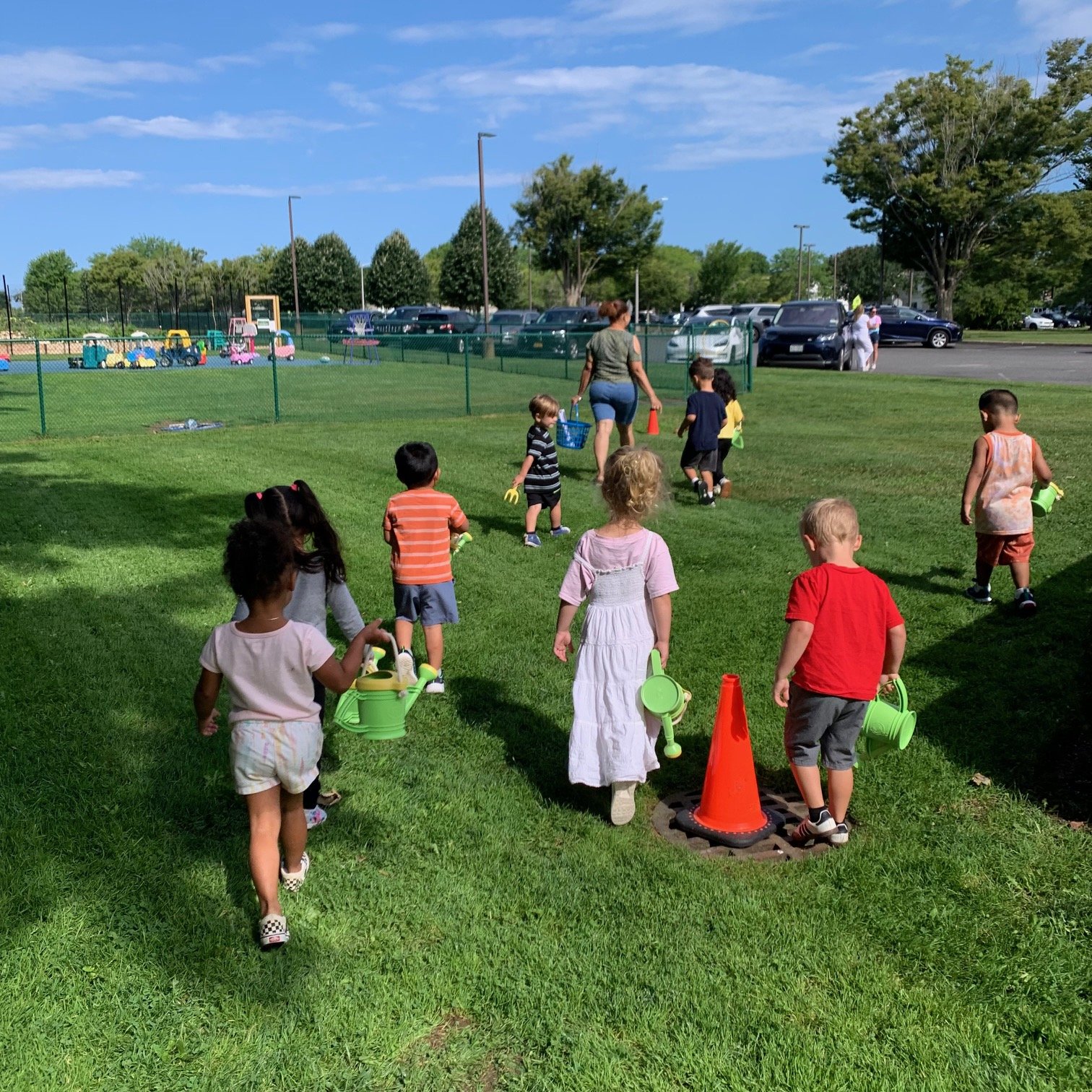
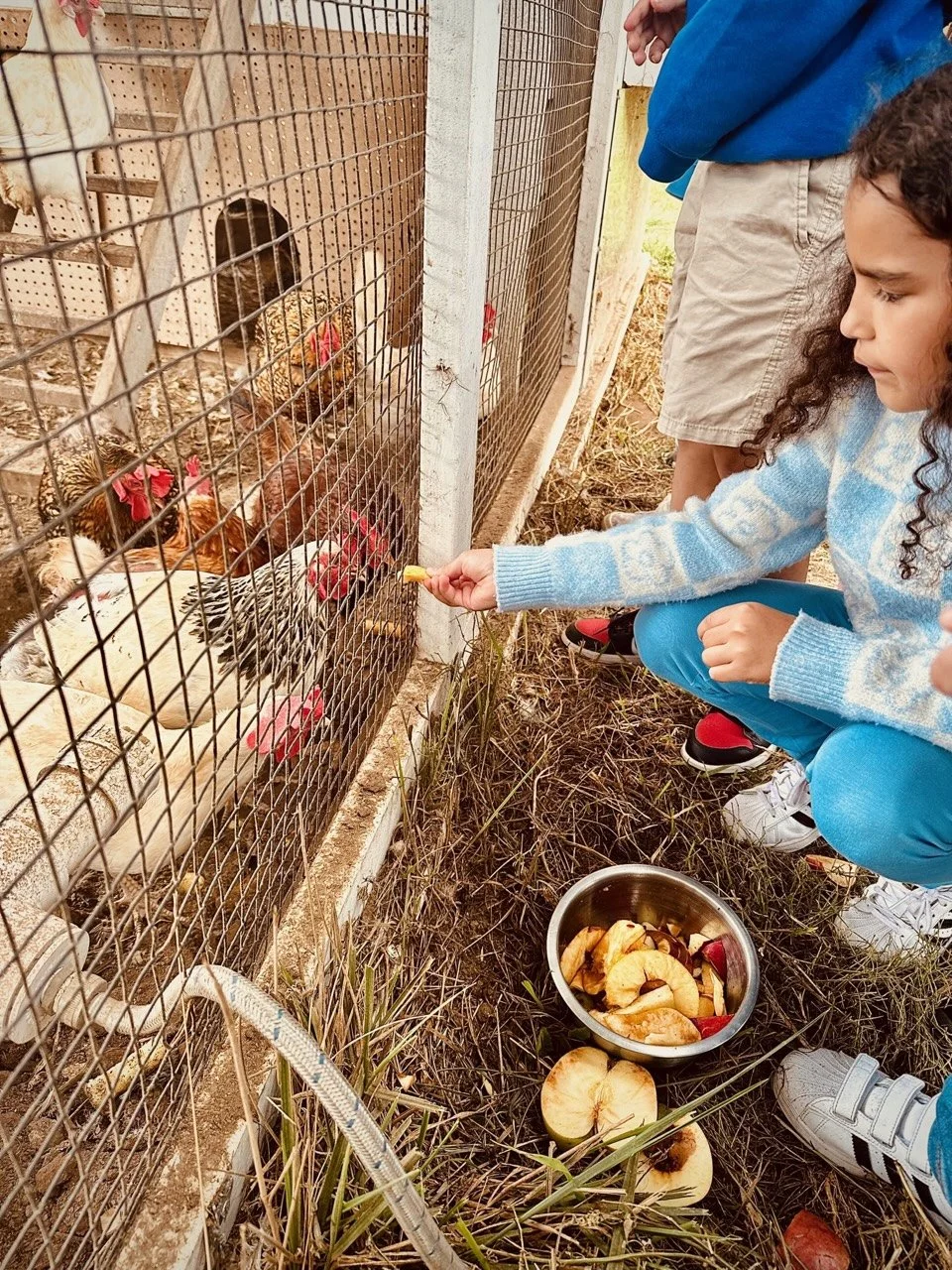
A Slow Food Master Farmer works to help our local schools build and design educational, and incorporate fun activities about growing food into their school curricula to help our children grow bright, independent, strong, and connected to the land they live on.

Maria Plitt, current Master Farmer advisor
Maria has always had a passion for gardening. She has a Master of Science degree in Elementary Education and has worked at Eastport Elementary for 16 years, 12 of those years in the Science Lab. She has also spearheaded an Edible School Garden at the school for 14 years. This garden had 20 beds, 15 dwarf apple trees, an indoor aquaponics system, and a large living wall. She was the 2017 NY State Agriculture in the Classroom Teacher of the Year, lobbied for school garden funding in Albany, and ran many character-building activities at the school; Build a Blanket, Backpacks for Kids, Birthday in a Box all benefitting children in Foster Care to name a few. She was a member of the Edible School Garden Group for many years and eventually became the Chair.
Maria is married to Ed and has three children and three beautiful grandchildren. She has written a children’s book with her daughter, illustrator Jordan Gibson called The Magic in my Window, and is currently working on book two, The Magic in my Backyard. She will be teaching some garden courses at Stony Brook Southampton’s Food Lab and loves the idea of working with East End schools to develop or enhance their school garden programs.
PREVIOUS MASTER FARMERS
Melissa Mapes
Lucy Slezak
Marc-Antonio Smith
Roxanne Zimmer